
General Ely S. Parker: Military secretary to Union General Ulysses S. Grant
In an interesting twist of history, General Ely S. Parker, a member of the Seneca Tribe, wrote the "articles of surrender" which General Robert E. Lee signed at Appomattox
Court House on April 9, 1865. General Parker, who served as Gen. Ulysses S. Grant's military secretary and was an attorney, was once rejected for Union military service
because of his race. At Appomattox, General Lee supposedly remarked to Parker," I am glad to see one real American here," to which Parker replied, "We are all Americans."
Ely Parker: Chief, Lawyer, Engineer, and Brigadier General
In an interesting twist of history, General Ely S. Parker, a member of the Seneca Tribe, wrote the "articles of surrender" which General Robert E. Lee signed at Appomattox
Court House on April 9, 1865. General Parker, who served as Gen. Ulysses S. Grant's military secretary and was an attorney, was once rejected for Union military service
because of his race. At Appomattox, General Lee supposedly remarked to Parker," I am glad to see one real American here," to which Parker replied, "We are all Americans."
Ely Parker: Chief, Lawyer, Engineer, and Brigadier General


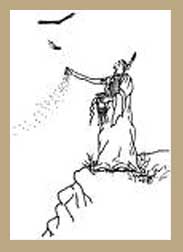 It goes up to God. When we offer it, we are telling our God that we are speaking the truth. Wherever there’s tobacco offered, everything is wakan - sacred, or filled with power. We make a promise to speak the truth. That’s why we Indians got into trouble with the white man’s ways early on. When we make a promise, it’s a promise to the Great Spirit, Wakan Tanka. Nothing is going to change that promise. We made all these promises with the white man, and we thought the white man was making promises to us. But he wasn’t-he was making deals. We could never figure out how the white man could break every promise, especially when all the priests and holy men were involved. We can’t break promises.


